
Don’t Step on a Bee Day
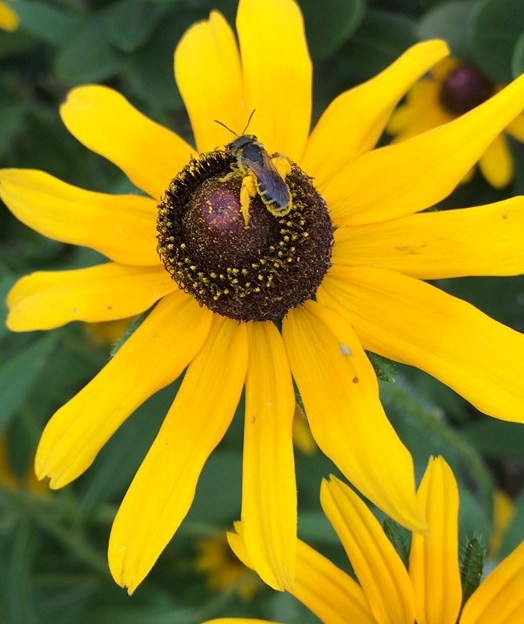
OK, I admit it. I borrowed this holiday from the UK, so If you’ve never heard of it, you’re not alone. I hadn’t heard of it either. But the need to protect our bees is important world-wide. We can also address this situation in our homes and our local communities.
No one can deny the importance of our bees to our food supply. Without bees, 1/3 of the foods we eat would fail to exist as bees are necessary for their pollination. Do you enjoy eating watermelons, blueberries, squash, beans, eggplant, okra, and cucumbers for starters? Honeybees are moved around everywhere for crop pollination. Tractor-trailer loads of bees are driven across the country every year to pollinate major crops such as almonds, apples, blueberries, and more.
Having married a commercial beekeeper and worked along side him providing crop pollination and selling honey, I learned much about the importance of bees to our food supply. Honey is only a minor food item in the big picture. Honeybees are the most manageable kind of bee, but there are many other native bees that contribute to our food supply. Bees not only make our food supply possible, they also pollinate berries, fruit, and seeds for birds and other wildlife.
Our bees are being threatened in many ways. Pesticide misuse and abuse have become a serious threat. Mosquito spraying kills not only mosquitoes but any and all insects exposed to the spray—including dragonflies and bats that are our best natural line of defense against mosquitoes.
People have become so obsessed with beautiful green lawns that they use both insecticides and herbicides so that only grass can survive. Any insects in the grass or underground become poisoned. Poisoned insects in turn kill birds and animals that feed on them. This practice has become a vicious cycle. By killing the “weeds” in their lawns, herbicides remove precious food needed by bees, both honeybees and native bees alike. Dandelions and clover are two valuable food sources for bees in the spring at the time they need them most to grow their colonies.
Roadside maintenance should never rely on herbicides. Instead, roadsides need to be seeded with native wildflowers that will support our bees and in turn protect all wildlife.
What can we as individuals do to support and protect the bees around us?
- Overcome our fear of bees and stinging insects. Learn about and teach your children the benefits of these insects. Understand that they are not looking for an excuse to sting, but generally will defend themselves if they feel threatened. Never swat at a bee or wasp that flies close to you. Move away if necessary, but swatting them only gives them a reason to sting you.
- Allow clover patches and dandelions to grow in your lawn. Mow around them for a few weeks in the early spring and pray there are bees to find them for food.
- Plant native flowers in your flower beds, and even around your vegetable garden. The presence of bees discourages other pests from laying eggs on your vegetable plants.
- Take a beekeeping class and get two hives of honeybees if you aren’t in too close of a neighborhood for beekeeping. There are less conspicuous ways to support bees such as mason bees which nest in holes in a block of wood.
- Educate your neighbors and local officials about the importance of protecting bees by using alternative methods for controlling mosquitoes and maintaining roadsides.
Protecting our bees is one way we protect ourselves and our children and grandchildren. Never underestimate the value of all creatures great and small that were given to us by our Creator God.

Be sure to sign up to receive updates of each new post on our Christian Children’s Authors blog. Follow us for new book news, free resources, parenting tips, and encouragement!
#christianchildrensauthors #christianbooks #christianauthors