
The Bible as a Treasure Map
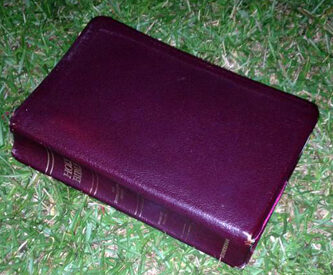
Ron Wyatt was an amateur archaeologist. He wanted to find many important places that are recorded in the Bible. He looked for Noah’s Ark. He looked for the Red Sea Crossing and Mt. Sinai. He looked for Sodom and Gomorrah. And Ron Wyatt believed he found each of these places and more.
Other archaeologists made fun of Ron Wyatt. They said he was not professional. They said he did not bring back enough evidence to satisfy them. They laughed and demanded to know how he could be so lucky as to find so many sites that other professional archaeologists had not found.
But Ron Wyatt had something the others were not willing to take seriously. Ron Wyatt read and diligently studied his Treasure Map. Even though his map was available to everyone, it had been ignored by most. Ron Wyatt knew that the clues to finding the geographical treasures in the Bible were right there in the Bible for anyone to read and study. But most archaeologists have assumed that the Old Testament in the Bible only contained fairy tales, so they did not bother to dig in those writings for clues.
I have been working on a family devotions book about Moses, so the Red Sea crossing and Mt. Sinai have been very much in focus for me for some time. As I read Genesis and Exodus for the umpteenth time, I decided to look for the various locations on the maps in my Bible and a Bible atlas. It was then that I made an amazing discovery. Moses was tending his father-in-law’s sheep when God spoke to him on Mt. Sinai. Moses’s father-in-law was the priest of Midian. I found Midian on the map and learned that it was in what is now Saudi Arabia, so I expected to find Mt. Sinai close to Midian. To my disbelief, I saw that my map showed Mt. Sinai several hundred miles away—and on the other side of a large body of water.
Searching on the web I learned about Ron Wyatt’s discovery of Mt. Sinai, and it made perfect sense to me. Not only was it within a reasonable distance from Midian, but the location also contained so much evidence literally written in stone to support the Biblical account as it is written in Exodus.
- The peak of the mountain is black as if it had been burned, yet when the stones were turned over, they were brown on the underside.
- There is a great pile of rocks with Hebrew and Egyptian symbols engraved on them. The symbols include Egyptian bull gods. Wyatt believed this was where the Israelites built an altar for their golden calf while Moses was on the mountain talking with God.
- There is another altar where Moses held sacrifices. Leading up to the altar is a long, partitioned section where the animals brought for sacrifice could be held as Moses or the priest made the sacrifices, one at a time.
- Moses made twelve pillars, one for each tribe. They are at this site near the altar.
- Unlike the site on the Sinai Peninsula, there is a large flat area with plenty of room for the vast number of Israelites who camped there.
Before Ron Wyatt died in 1999, he intuitively said, “When I am gone, they will have to deal with the evidence.” I cannot agree more. These evidence and more are set in stone for the world to see if they will only look.
The Bible is full of treasures. Some are carved in stone. Others are there for filling our hearts and minds with God’s peace as we come to know him more fully day by day. Are you digging in the right places for treasures that will last?
Jesus said in Matthew 6:19-21, “Do not lay up for yourselves treasures on earth, where moth and rust destroy and where thieves break in and steal, but lay up for yourselves treasures in heaven, where neither moth nor rust destroys and where thieves do not break in and steal. For where your treasure is, there your heart will be also.”
Written by Janice D. Green
Be sure to sign up to receive updates of each new post on our Christian Children’s Authors blog. Follow us for new book news, free resources, parenting tips, and encouragement!
#christianbooks #christianauthors #christianhomeschool